



What Is Generative Engine Optimization (GEO)?
Generative Engine Optimization (GEO) is the practice of structuring content so AI answer engines can find it, extract it, and cite it in their responses. Where SEO optimizes for the ten blue links, GEO optimizes for the synthesized answer that sits above them. We define it around the passage, not the page: an AI engine lifts a specific paragraph, definition, or data point and names your brand as the source.
Your #1 Google Ranking Means Nothing to ChatGPT
One number should change how you plan content: 88% of Google AI Mode citations point to pages that aren’t in the organic top 10 for the same query, according to Moz’s analysis of nearly 40,000 searches. The page that earns your blue link often isn’t the page ChatGPT, Perplexity, and Google AI Mode actually cite.
The root cause is structural. AI engines read at the passage level, pulling chunks from dozens of sources to assemble a single answer. A page that ranks well but won’t break into quotable chunks stays invisible to them. We’ve watched teams that structure for extraction now capture a disproportionate share of AI mentions while most competitors still write for the old SERP.
How AI Answer Engines Differ From Google
Applying SEO logic directly to AI engines leads you astray. Here is the framework that explains why.
Three mechanics change how you need to structure content:
1. Query fan-out. AI engines run multiple related queries behind the scenes, pulling variations, subtopics, and adjacent intents, then aggregate citations from all of them. Moz’s Tom Capper describes it as branching out to a broader set of queries and topics rather than the exact phrase you typed. Your content has to cover adjacent questions, not just the head term.
2. Passage-level extraction. AI engines pull individual passages that answer specific micro-intents. A 3,000-word pillar page is useless if an AI can’t isolate the single paragraph that answers “what’s the difference between ABM and demand generation?”
3. Multi-platform sourcing. Moz found YouTube is the second most-cited external source in AI Mode, ahead of Reddit, Facebook, and LinkedIn, with Wikipedia the most-cited domain overall. A brand that exists only on its own domain is invisible across most of that citation surface.
The Four Content Structures AI Engines Actually Cite
After studying which B2B content earns AI citations, four structural patterns show up again and again.
The common thread is extractability. Each pattern delivers a self-contained unit of information an AI engine can lift, cite, and reassemble without losing context. A paragraph that only makes sense after the three paragraphs before it won’t survive extraction.

We’re asking you to write modules that work standalone rather than chapters that require reading from page one. We’ve seen the same discipline power a structured AI content brief, where each section is defined as its own extractable block before a writer starts.
Technical Tactics That Increase Citation Probability
Content structure sets the foundation. Three technical layers raise the odds AI engines find, parse, and cite your work.
Structured data with a GEO lens. Most B2B sites implement Article, Organization, and BreadcrumbList schema, and that’s table stakes. For GEO, two additional types matter more: FAQ schema mirrors how AI engines structure responses (question-to-answer pairs), and HowTo schema does the same for process content. The nuance most guides miss: don’t just mark up an FAQ section at the bottom of the page. AI engines weight citations by content prominence, so FAQ content buried below the fold carries less weight than FAQ content integrated into the main body.
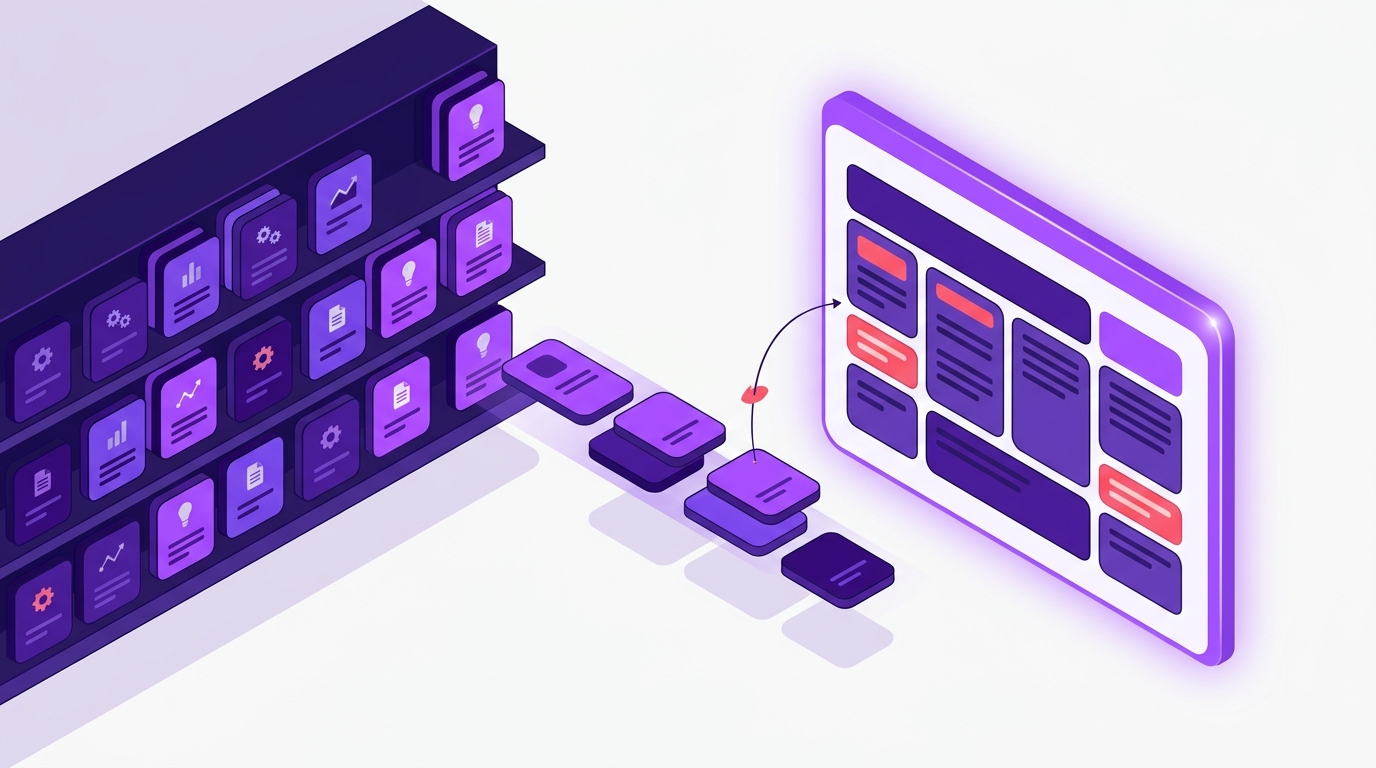
Content chunking with clear hierarchy. Your H2 and H3 hierarchy is the extraction map, not just a readability aid. Each H2 should stand for a question an AI engine might answer, and each paragraph under it should deliver a complete response. This connects to modular content design: when each block stands alone, AI engines cite passages without losing meaning.
Citation-ready data attribution. AI engines are trained to prefer verifiable claims over unsourced assertions. When you include a named source inline, as in “According to Moz’s 2026 AI Mode analysis,” you’re building a trust chain from the source publication to your content to the AI response. That chain is one of the strongest citation signals available.
Reference authorities, video platforms, and community sites collectively account for 80% of AI citations, per Moz. If your brand isn’t represented on YouTube and in industry communities, you’re invisible across most of that surface. The same platform logic applies to your broader stack: the AI content platforms that actually work are the ones that publish your content where those communities already gather; they’re built for that surface.
The 5-Point AI Citability Audit
You don’t need to rewrite your entire content library. Start with the 20% of pages that drive 80% of your organic traffic and run this audit. Each point scores 0 (missing) or 1 (present), for a Citability Score out of 5.
Scoring guide: 0-2 means a structural rebuild. 3 means decent but gapped. 4-5 means AI-citable with minor improvements.
Run this audit on our top 10 to 20 pages. The fixes are rarely massive rewrites; more often they’re structural adjustments: move a definition up, rewrite clever headers as descriptive ones, add source attribution to existing claims, and mark up existing FAQ content with schema. If you want a repeatable way to turn that audit into a briefing system, the content engineer role exists precisely to make extraction structure a habit rather than an afterthought.
Measuring AI Citation Impact Without an Enterprise Tool
Most GEO measurement advice assumes you have a tool like Athena or Profound. Most B2B content teams don’t. Here is how to track AI citation impact with what you already run.
1. Server log analysis for AI referrer patterns. Set up a log filter for referrer strings containing chatgpt.com, perplexity.ai, gemini.google.com, and claude.ai. Also track zero-referrer traffic that lands on deep content pages; many AI interfaces don’t pass referrer headers, so that becomes a proxy signal for AI-driven visits.
2. Brand monitoring for AI-specific mentions. Set up Google Alerts for “according to [Your Brand],” “ChatGPT told me,” and “Perplexity says.” These natural-language patterns indicate when your content is being cited through AI. Imperfect but directionally useful, and free.
3. Zero-referrer conversion tracking. Create an analytics segment for direct or no-referrer traffic that lands on content pages rather than the homepage or branded search. If that segment grows while tracked organic stays flat, you’re likely looking at AI citations as the driver.
4. Manual spot-checking ritual. Once a month, run your top five target queries through ChatGPT, Perplexity, and Google AI Mode. Document whether your brand appears, in what position, and with what framing. Qualitative, but the closest thing to a direct AI visibility audit you can get for free.
Measurement doesn’t need to be perfect. The goal is directional signal: is your AI citation share growing, flat, or declining? Even rough data tells you whether structural changes are working. And it matters, because AI sits upstream of the Day One shortlist. As Foundation Inc’s GEO research shows, ChatGPT drives only 0.5% of visits yet accounts for 12.1% of new signups, converting at roughly 24 times the average rate. If you’re not cited when AI explains your category, you may never make that shortlist.
That’s also why we keep pushing teams toward measuring content impact beyond last-click attribution. When AI engines cite your content, the conversion path often looks like an AI mention, then a direct site visit days later, then a demo request. Traditional attribution models can’t see that AI touchpoint.
Frequently Asked Questions About AI Citations
What is the difference between SEO and GEO?
SEO optimizes a page to rank in the ten blue links of a traditional search result. GEO optimizes content to be extracted and cited inside an AI answer engine’s synthesized response. SEO measures clicks and traffic; GEO measures citation share and mention rate. The two reinforce each other, but they’re optimizing for different units: the page versus the passage.
How do I get my content cited by ChatGPT?
Write in extractable units. Open sections with a standalone definition, attach a named source to every data point, use descriptive H2s that map to real questions, and make each paragraph understandable on its own. Then publish where AI engines already look, including YouTube and the industry communities your buyers read.
Do I need a GEO tool to see results?
No. You can track AI referrer patterns in server logs, set Google Alerts for citation-style phrases, segment zero-referrer conversions, and manually spot-check your top queries monthly. An enterprise tool adds scale, but the directional signal is available from what you already run.
Does ranking on Google still matter for AI citations?
Yes. The #1 organic result gets cited more than position #10, so strong Google rankings still correlate with AI mentions. Ranking alone is no longer enough. That’s why we treat SEO as the foundation and GEO as the layer that expands your reach into the synthesized answers.
How long before structural changes show up in AI results?
Expect a lag of several weeks to a few months as AI engines re-crawl and re-weight your pages. Re-score your citability audit quarterly and treat the first quarter as a baseline. Consistent structure compounds; a one-off edit won’t move the number on its own.